
Single Crystal Furnace vs Directional Solidification Furnace: Principles, Differences and Industrial Applications
Oct 14, 2026
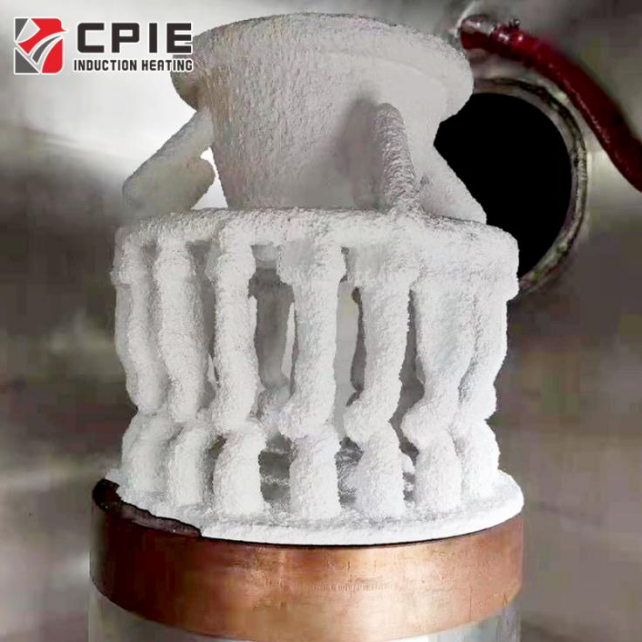
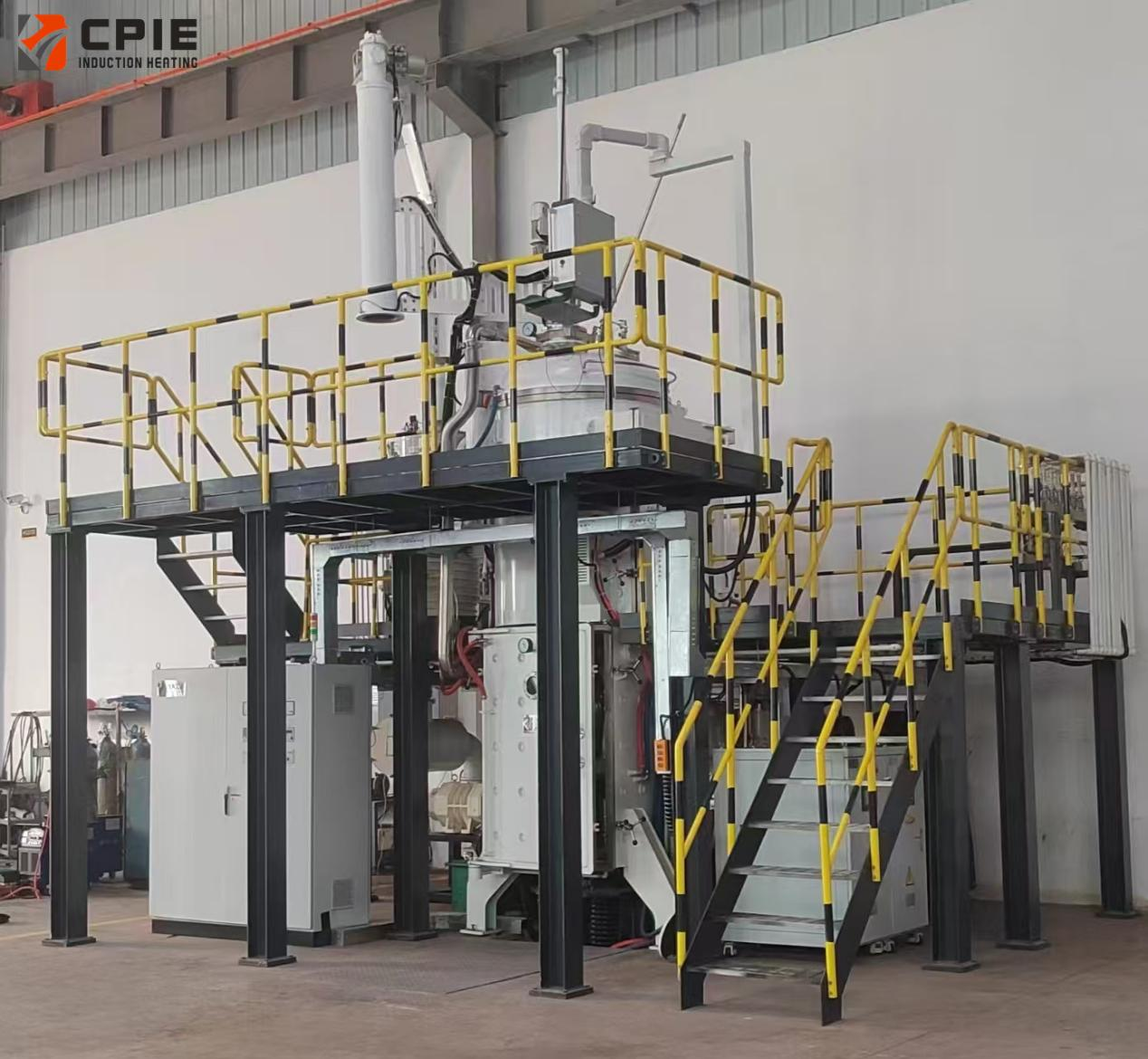
Zhuzhou, Hunan Oct 13, 2026 (Issuewire.com) - In advanced metallurgy, semiconductor manufacturing, and aerospace component production, single crystal furnaces and directional solidification furnaces are two core thermal processing equipment. Both rely on precise temperature field control to regulate metal and crystal solidification behavior, but they differ fundamentally in working principles, final microstructure, performance advantages, and industrial scenarios. Many global manufacturers and purchasers often confuse these two furnaces. This article provides a detailed, industry-oriented introduction to clarify their features and applications. 1. What is a Directional Solidification Furnace (DS Furnace)? A directional solidification furnace is professional industrial equipment designed for controlled unidirectional solidification. Its core working principle is building a stable one-dimensional temperature gradient inside the furnace chamber, dividing the cavity into a high-temperature heating zone and a low-temperature cooling zone separated by a heat insulation baffle. During operation, molten alloy or raw material is poured into a ceramic shell mold. The mold is slowly withdrawn from the hot zone to the water-cooled cold zone at a programmed constant speed. Heat dissipates only along the vertical direction, making the material solidify sequentially from bottom to top. This process restricts random grain growth and forces grains to extend along the stress direction. Core advantages and microstructure features: Eliminates transverse grain boundaries that cause high-temperature failure Forms regular columnar crystal structures with parallel longitudinal grain boundaries Greatly improves high-temperature creep resistance and thermal fatigue resistance Equipped with high-vacuum systems and precise withdrawal control systems, modern directional solidification furnaces avoid material oxidation and ensure consistent solidification quality. With optional grain selection components, it can further upgrade columnar crystal growth to single crystal growth, realizing dual production of directional columnar crystals and single crystals. 2. What is a Single Crystal Furnace? A single crystal furnace is precision equipment dedicated to growing complete single-crystal structures without any grain boundaries. Different from directional solidification furnaces that form columnar crystals, it realizes full ordered atomic arrangement through standardized crystal growth processes. There are two mainstream industrial technical routes: 2.1 Czochralski (CZ) Method Single Crystal Furnace This is the most widely used type for semiconductors and photovoltaics. Under inert argon protection, polysilicon or other crystalline raw materials are completely melted in a quartz crucible. A seed crystal with fixed crystal orientation is immersed into the melt, then lifted and rotated at a stable speed. Atoms grow sequentially along the seed crystal orientation to form integral single crystal rods. It is the core equipment for manufacturing silicon wafers and photovoltaic silicon ingots. 2.2 Bridgman Method Single Crystal Furnace Applied in high-end aerospace superalloy production, this technique derives from directional solidification principles. On the basis of unidirectional temperature gradient control, a grain selector is added to block miscellaneous grains. Only one qualified single grain is retained to grow freely, finally forming grain-boundary-free single crystal castings. This model is essentially an upgraded version of directional solidification furnaces for single crystal customization. Core advantages of single crystal products: Zero grain boundaries, eliminating structural defects Uniform internal stress and extremely stable mechanical and electrical properties Ultra-high high-temperature durability and fatigue resistance 3. Key Differences Between the Two Furnaces To help global customers quickly distinguish and select suitable equipment, we summarize the core differences as follows: Microstructure Output: Directional solidification furnaces mainly produce directional columnar crystals (with parallel grain boundaries); single crystal furnaces produce grain-boundary-free single crystals. Growth Logic: Directional solidification relies on unidirectional temperature gradient cooling; single crystal growth relies on seed crystal guidance + precise temperature field control or grain selection technology. Performance Level: Single crystal materials have better high-temperature resistance, toughness and stability than directional columnar crystal materials. Production Cost & Difficulty: Directional solidification furnaces feature lower cost and higher yield; single crystal furnaces require ultra-high precision control, with higher technical thresholds and production costs. 4. Industrial Applications 4.1 Applications of Directional Solidification Furnaces Directional solidification furnaces are widely used in medium and high-end precision casting fields, especially suitable for mass production of high-temperature structural parts: Aerospace & Gas Turbine: Mass production of directional columnar crystal turbine blades, which are key thermal-end components for aero-engines and industrial gas turbines, balancing performance and cost New Energy & Metallurgy: Preparation of directional solidified alloy ingots and high-performance magnetic materials Scientific Research: Study of alloy solidification mechanisms, grain growth rules and new material development 4.2 Applications of Single Crystal Furnaces Single crystal furnaces dominate high-precision, high-performance manufacturing fields with ultra-stable material properties: Semiconductor & Photovoltaic Industry: Production of 8-12 inch semiconductor silicon wafers and photovoltaic single crystal silicon rods, the foundation of chip and solar cell manufacturing High-End Aerospace: Production of nickel-based single crystal superalloy blades for advanced aero-engines, greatly improving engine thrust and service life Optoelectronic Materials: Growth of sapphire, silicon carbide, YAG laser crystals and other optical single crystal materials 5. Conclusion: In short, the directional solidification furnace is the basic equipment for ordered crystal growth, capable of producing cost-effective directional columnar crystal products; the single crystal furnace is high-end precision equipment for ultimate crystal structure optimization, providing zero-defect single crystal materials for top-tier manufacturing. The two types of furnaces are not mutually exclusive. Bridgman single crystal furnaces are essentially advanced directional solidification equipment, covering the full range from columnar crystal to single crystal production. With the upgrading of global aerospace, semiconductor, and new energy industries, both furnaces have become indispensable core equipment in advanced metallurgy, supporting the iterative upgrade of high-performance metal and crystal materials worldwide.
Source :ZHUZHOU HANHE INDUSTRIAL EQUIPMENT CO., LTD.
This article was originally published by IssueWire. Read the original article here.
More News

Ontario doctors demand apology from province for letters flagging high number of days worked, patients seen
The Ontario Medical Association is looking for an apology from the province, after it says 'hundreds' of doctors received letters recently stating they were working too many days or seeing too many patients. A health ministry spokesperson says the letters are not an assumption of inappropriate billing.

Airport Eats: Where to Eat and Drink at Portland International Airport
Portland International Airport’s $2.15 billion transformation brings travelers craft cocktails, wood-fired pizza, Oregon seafood and exceptional coffee, with local restaurants turning PDX into an unexpectedly delicious destination before departure. The post Airport Eats: Where to Eat and Drink at Portland International Airport appeared first on Business Traveller.

Tanzania to Host World Travel Awards Grand Final on December 12th.
Tanzania is preparing to take centre stage on the international tourism calendar after being officially announced as the host destination for the 2026 World Travel Awards Grand Final, which will take place on December 12th at the stunning The Four Seasons Safari Lodge Serengeti, a premier 5-star luxury property nestled deep within the Central Serengeti National Park in Tanzania.

Morocco takes centre stage in London through the art of Winston Churchill
The Ambassador of the Kingdom of Morocco to the United Kingdom and the Moroccan National Tourist Office (MNTO) hosted an exclusive reception at the prestigious Wallace Collection in London, in connection with the exhibition Winston Churchill: The Painter. The initiative reflects MNTO’s ambition to place culture and internationally renowned figures at the heart of Morocco’s global tourism promotion. Coinciding with World Travel Market (WTM) London, the Moroccan National Tourist Office selected one of Britain’s most distinguished art institutions, the Wallace Collection, as the setting for an evening dedicated to the exhibition Winston Churchill: The Painter.

Naher Osten: Airlines setzen Flüge nach Dubai weiter aus
Die europäischen Airlines haben die Wiederaufnahme nach Dubai erneut verschoben. Condor setzt die Verbindungen in das Emirat ganz aus. The post Naher Osten: Airlines setzen Flüge nach Dubai weiter aus appeared first on Business Traveller.

Sri Lanka Sets Sights on 4-5 Million Visitors by 2030 at WTM London 2026
Sri Lanka Tourism Promotion Bureau (SLTPB) revealed the island’s latest tourism developments at World Travel Market (WTM) London 2026, taking place from 3-5 November at ExCeL London. Led by the Deputy Minister of Tourism, Hon. Prof. Ruwan Ranasinghe, the Sri Lanka delegation hosted a lunch and press conference on 4 November, sharing updates on new air connectivity from the UK, the country’s national tourism strategy and its priorities for 2027.

Quito Concludes Its European Promotional Tour with Its Own Stand at WTM London 2026
Quito is participating at World Travel Market (WTM) London 2026, taking place from 3 to 5 November at ExCeL London, with its own stand (N8-314), where it is showcasing its tourism offering and strengthening its positioning among international travel industry professionals. The Ecuadorian capital is using this global platform to reinforce relationships with tour operators, travel agencies, specialised media and strategic partners across Europe’s key source markets.

Qatar Airways Inaugurates Flights to Venezuela and Colombia
The airline inaugurates twice-weekly flights linking Doha, Bogotá and Caracas, becoming the first Gulf carrier to serve Venezuela while expanding connections between South America, Asia and the Middle East. The post Qatar Airways Inaugurates Flights to Venezuela and Colombia appeared first on Business Traveller.

Travel Around Paris And We'll Guess Your Relationship Status
Is there any city that's more romantic? View Entire Post ›

Broadcasters Julia Bradbury and Kate Humble extol virtues of the great outdoors during WTM London
Broadcasters Julia Bradbury and Kate Humble urged tour operators at WTM London to think carefully about how they target different audiences and the language needed to woo the right customers. Speaking yesterday during sessions on the Wanderlust Stage, they both extolled the virtues of the great outdoors and getting off the beaten track – especially if it encourages travellers to put down their phones and fully experience destinations.

Visit Qatar Launches Two-Night Doha Stopover Offer for UK Customers
Visit Qatar announced the launch of Stopover Your Way (Enjoy Two Nights on Us) at World Travel Market (WTM) London, offering eligible UK travellers two nights’ accommodation at participating four-star hotels across Qatar. Developed in partnership with Qatar Airways and Discover Qatar, the promotion encourages travellers to turn their journey into an opportunity to discover all that Qatar has to offer, from its rich cultural heritage to its beaches, desert adventures, museums and vibrant culinary scene. There are a number of participating four-star hotels, and customers have flexible options to upgrade or extend their stay.

String duo Sol Gabetta and Patricia Kopatchinskaja impress in theatrical Hong Kong recital
Seldom is the idiom to show up “with bells on toes” taken literally, but that is exactly what Moldavian-Austrian-Swiss violinist Patricia Kopatchinskaja and Argentine cellist Sol Gabetta did at their recital at Hong Kong City Hall on November 2. Classical music boundaries have no place in the pair’s playbook, and their theatrical entrance for the last leg of their Asian tour – each from opposite sides of the stage, dressed in bold colours and wearing slip-ons with bell-lined toes – was a clear...
YOUR NEWS, OUR NETWORK.
Do you have Great News you want to tell the world?
Be it updates about your business or your community, you can make sure that it’s heard by submitting your story to our network reaching hundreds of news sites across 6 verticals.