
Social-Capitalism, Protecting Healthcare, Capitalism and Democracy
Oct 6, 2026
Fort Myers, Florida Oct 5, 2026 (Issuewire.com) - HEALTHCARE IN THE UNITED STATES
A NEWS SERIES ABOUT HOW WE GOT HERE - AND HOW WE MIGHT FIX IT
ARTICLE 9 CONCLUSION
Social-Capitalism
Protecting Healthcare, Capitalism and Democracy
America does not have to choose between caring for its people and protecting the competitive economy that creates its prosperity.
We began this series with a frightened family in an emergency room. That was deliberate.
A person who believes that a husband, wife, child, parent or friend may die does not behave like an ordinary shopper. Fear changes the economic relationship. The patient cannot always postpone the purchase, compare every price or simply walk away.
From that simple observation came eight articles and a much larger question.
Should America expect the same economic system to perform every social function equally well?
Perhaps not.
That does not require rejecting capitalism. It may require understanding capitalism well enough to know where it works best.
What We Have Learned
The first eight articles followed healthcare from the patient's bedside into the larger American economy.
- Fear and inelastic demand can weaken the bargaining power that ordinary consumers use to discipline prices.
- Medicine depends upon professional trust and independence that should be protected from unnecessary financial pressure.
- The patient receives the healthcare even though employers, insurers and government may finance or negotiate much of its cost.
- Concentrated markets, negotiated prices, networks and steering can make competition more complicated and require careful antitrust scrutiny.
- Hospital charges, negotiated amounts, contractual adjustments, accounting treatment and tax treatment are related questions, but they are not automatically the same question.
- Tax-exempt status does not place an organization outside otherwise applicable law.
- Other democratic countries use many different mixtures of public financing, social insurance, regulated private insurance and private medical delivery.
- America's healthcare costs do not stop at the hospital door; they can reach wages, employers, government budgets, manufacturing and the country's international competitiveness.
Those observations do not produce one automatic solution.
But they do suggest that the traditional argument - capitalism on one side and social responsibility on the other - may be asking the wrong question.
What Is Social-Capitalism?
For purposes of this series, Social-Capitalism is a proposed framework, not a claim that one established ideology has all the answers.
Its principle is straightforward:
USE COMPETITIVE CAPITALISM WHERE COMPETITION WORKS.
USE COLLECTIVE RESPONSIBILITY WHERE ESSENTIAL HUMAN NEEDS CANNOT RELY SAFELY ON ORDINARY MARKET BARGAINING.
The objective is not to divide America into a capitalist half and a socialist half.
It is to recognize that different economic tools can perform different jobs inside the same democratic country.
Protect Capitalism Where Capitalism Is Strongest
Competitive capitalism has extraordinary strengths.
Manufacturers have powerful incentives to build a better product for less money. Technology companies compete to invent. Farmers improve productivity. Builders search for better methods. Transportation companies improve logistics. Entrepreneurs risk their own capital because success can produce a reward.
Customers in these markets often possess the power that began this series: they can compare, substitute, postpone and walk away.
That consumer power helps make competition work.
America should protect that engine.
It should encourage entrepreneurship, private investment, manufacturing, innovation, competition and the creation of wealth.
A healthcare reform that unnecessarily damages those strengths would solve one problem by creating another.
Healthcare Presents a Different Bargaining Problem
Essential healthcare can be different because the patient may not possess ordinary consumer power.
A heart attack does not wait for a sale. Cancer does not negotiate. A frightened parent does not shop for emergency surgery the way that parent shops for an automobile.
Insurance adds another layer because the patient may consume the service while another organization negotiates or pays much of its price.
That is why this series proposes considering essential healthcare as a social guarantee rather than relying upon the frightened patient to create market discipline.
A social guarantee does not necessarily mean government must own every hospital, employ every physician or manufacture every medicine.
Article 7 demonstrated that democratic countries have constructed many different combinations of public responsibility and private delivery.
America can design its own.
Protect the Doctor-Patient Relationship
Any American reform should begin by protecting the independence of medicine.
The physician should remain accountable to professional standards and the welfare of the patient.
Doctors should be compensated fairly. Nurses and other caregivers should be valued. Hospitals must have sufficient resources to operate safely. Researchers must have incentives to discover new treatments.
But the financial system should be designed so that medical judgment is not unnecessarily distorted by reimbursement arrangements, ownership structures, referral incentives or the patient's ability to negotiate while frightened.
The purpose of reform should be to put the healer and the patient back at the center of healthcare.
Keep Private Innovation
A universal social guarantee for essential healthcare need not eliminate competitive private enterprise surrounding medicine.
Companies can still compete to develop medicines, artificial joints, diagnostic machines, hospital equipment, software, robotics and biotechnology.
Construction companies can compete to build hospitals. Technology companies can compete to improve medical records and diagnostics. Pharmaceutical and medical-device companies can continue to earn returns when they create genuine value, subject to the laws governing their markets.
Social responsibility for access and capitalist competition in production can coexist.
That distinction is at the heart of Social-Capitalism.
Separate Healthcare Security From the Job
Article 8 raised another possibility.
Employers can remain important participants in American economic life without being the principal mechanism through which millions of families obtain basic healthcare security.
A manufacturer exists to manufacture. A restaurant exists to serve food. A construction company exists to build. A small business owner should not necessarily need to become an expert in medical insurance simply to employ people.
Moving toward a broader healthcare guarantee could change the role employers play in financing coverage.
But there is no free healthcare. If employer premiums are reduced or eliminated, another financing mechanism must replace them.
Taxes, social-insurance contributions or another national financing method would still impose economic costs.
The relevant test is whether a redesigned system can provide necessary care more efficiently, predictably and fairly while reducing the overall burden that healthcare places on households, businesses and government.
Enforcement Must Be Part of Reform
Changing the financing system without enforcing the rules would leave an important part of the problem untouched.
This series has raised questions involvingcompetition, steering, contractual arrangements, accounting, taxation, nonprofit status and government oversight.
Some practices discussed in the series are lawful. Others may become unlawful only under particular facts. Some propositions advanced by the author remain disputed legal or tax theories.
A reformed system therefore needs something more durable than accusations.
It needs transparent rules and credible enforcement.
- Similar conduct should be examined under the same law regardless of the size or prestige of the institution.
- Nonprofit status should bring neither automatic suspicion nor immunity.
- Whistleblower allegations should be evaluated on evidence rather than treated as verdicts.
- Antitrust enforcement should protect genuine competition without treating ordinary independent business decisions as conspiracies.
- Tax administration should determine tax consequences from the actual transaction and governing law, not merely from labels used in financial accounting.
Public confidence depends upon knowing that the same rules apply to everyone.
Democracy Is the Safeguard
A social guarantee also creates government power, and government power deserves scrutiny just as corporate power does.
A healthcare system cannot be considered successful merely because government operates or finances it.
Government can waste money. Bureaucracies can become unresponsive. Rules can become outdated. Political pressure can distort decisions.
That is why democracy, transparency, independent courts, legislative oversight, audits, free journalism and the ability of citizens to challenge government remain essential.
Social-Capitalism should therefore never mean exchanging unchecked corporate power for unchecked government power.
The objective is accountable power - wherever that power resides.
Measure the Results
Any reform should be judged by measurable results rather than ideological labels.
America should ask:
- Are people healthier and able to obtain necessary care?
- Are patients protected from financial catastrophe caused by essential treatment?
- Are physicians able to exercise independent medical judgment?
- Are total healthcare costs sustainable?
- Are taxpayers receiving value for the money spent?
- Can hospitals remain financially capable of providing high-quality care?
- Does the system encourage useful medical innovation?
- Are fraud, anticompetitive conduct and unlawful financial practices investigated and punished when proven?
- Does healthcare financing strengthen or weaken American workers and businesses?
- Does the system preserve individual freedom, democratic accountability and the rule of law?
If a reform cannot answer those questions successfully, its political label should not save it.
The United States as a Whole
Healthcare debates frequently divide Americans into groups: patients against insurers, employers against workers, taxpayers against beneficiaries, government against business, capitalism against socialism.
But the country ultimately pays for all of it.
The patient is also a worker, taxpayer and consumer. The employer depends upon healthy workers and customers. Hospitals depend upon communities. Government depends upon a productive economy. Manufacturing depends upon workers, infrastructure, investment and purchasing power.
The pieces cannot be separated indefinitely.
That is why the final measure of healthcare reform should be the United States as a whole.
A system that helps one sector while weakening the rest of the country is not enough.
A successful system should protect the sick without damaging the productive economy that must support it.
Return to the Beginning
Imagine again the family in the emergency room.
Someone they love may die.
Their fear is real. No economic system will eliminate it.
But perhaps we can master what happens around that fear.
We can insist that the physician's first concern remain the patient. We can make prices and financial relationships understandable. We can enforce laws without attacking medicine. We can protect competition where competition works. We can study other democracies without surrendering our own institutions. And we can ask businesses to compete at what they do best rather than making healthcare insecurity part of every employment relationship.
That is the proposal behind Social-Capitalism.
Not capitalism versus society.
Not government versus freedom.
Not business versus the patient.
The goal is to use the strengths of each system to protect the strengths of the other.
If America can protect essential healthcare while strengthening competitive enterprise, independent medicine, the rule of law and democratic accountability, healthcare reform becomes more than a medical policy.
It becomes an investment in the future strength of the United States.
END OF THE NINE-ARTICLE SERIES
Healthcare in the United States began by asking why fear changes the rules of competition. It ends by asking whether America can design a system that protects people when ordinary market bargaining is weakest while preserving competitive capitalism where it is strongest.
Editor's note: Social-Capitalism is presented here as the author's proposed framework for discussion. The series distinguishes documented facts and established law from allegations, disputed interpretations and proposed legal, tax or economic theories. Any detailed national reform would require separate analysis of financing, transition costs, federal and state authority, provider payment, insurance, taxation, patient choice and budget effects.
Source :Roy J. Meidinger
This article was originally published by IssueWire. Read the original article here.
More News

Brandons tops US searches for Barbados beaches as Accra leads in the UK and Canada
“Brandons Beach Barbados” drew an estimated 3,600 Google searches a month in the United States, 50% more than either Accra Beach or Carlisle Bay, its nearest rivals. In the UK and Canada, Accra took first place. Yet the UK and the US recorded the same number of monthly searches for Accra, at 2,400 apiece. What set the US results apart was the strength of interest in Brandons. The figures come from Beaches of Barbados, an independent island guide that analysed Google Keyword Planner estimates for the same 49 beach and bay terms in each market between October 2025 and September 2026. Each term included the word “Barbados”.

Brazil’s $21.7 billion in international travel spending signals opportunity for Anguilla
Brazilian travelers spent $21.7 billion abroad in 2025, underscoring the potential of this market for Caribbean destinations as Anguilla expands its outreach to Brazilian travel advisors, tour operators and media. The figure, reported by Brazil’s central bank in January 2026, represented a 10.4% increase over 2024 and the highest spending level since 2014. The Anguilla Tourist Board is targeting Brazil’s luxury market as part of its strategy to diversify the island’s international visitor base.

Department of Tourism, Culture and Media in Ajman Concludes Successful Participation at WTM
The Department of Tourism, Culture and Media in Ajman has concluded its participation in World Travel Market London 2026 (WTM London 2026), held at ExceL London from 3 to 5 November. The participation formed part of the Department’s strategic efforts to strengthen Ajman’s presence across international tourism markets, expand destination awareness, and showcase the emirate’s diverse tourism, cultural, and heritage experiences to global industry partners.

Injured Wainwright soldiers benefit from cutting-edge Canadian burn research
When news broke about the deadly training accident at CFB Wainwright that killed four soldiers and sent dozens more to hospital with severe burns, Véronique Moulin knew she had to help. She is on the front lines of research meant to help burn patients heal faster, with less pain and fewer scars.

How Godzilla’s appearance has evolved over 70 years, from puppet to costume to CGI
By Christopher Borrelli Seventy years ago, Godzilla, King of the Monsters! debuted in Chicago theatres as half of a double bill with a Roger Corman prison flick, Swamp Women. Infamously, the monster movie underwent an extensive facelift between its Japanese premiere in 1954 and its landfall in the United States two years later: two independent production companies bought the American rights on an agreement that anything too Asian or unsettling be removed for American audiences. Out went all the...

What’s New for Gothenburg in 2027: Volvo Turns 100, New Waterpark Opens & the Film Festival Turns 50
2027 is a year of milestones for Gothenburg. Volvo turns 100 in the city where it all began, the Gothenburg Film Festival celebrates 50 years, Way Out West marks two decades as one of Europe’s best music festivals, and a major new waterpark opens at the famous Liseberg theme park. Add to that a boutique hotel inside a 1913 police station, a new home for contemporary art and a major expansion for Vassen Market, and Sweden’s second city is making a strong case for being 2027’s most exciting European city break destination.

Ibiza beyond the summer crowds: Luxury villa specialists share 10 tips for spring & autumn holidays
As Ibiza’s autumn season draws to a close, island-based luxury villa specialists Mi Casa Tu Casa reveal why spring and autumn offer a different side of Ibiza, and share ten tips for families and larger groups planning a holiday outside peak season. For travellers considering Ibiza in 2027, the planning starts earlier than you might think.

A FESTIVE LONDON ESCAPE FOR GCC TRAVELLERS WITH GROSVENOR HOUSE SUITES AND BICESTER VILLAGE
Grosvenor House Suites, a luxury all-suite property in Mayfair, introduces A Luxurious Festive Escape, an exclusive seasonal offer created in partnership with Bicester Village, ideal for GCC travellers planning a visit to London over the festive period. Available for stays from 29 November 2026 to 3 January 2027, the offer combines apartment-style accommodation with daily breakfast, a VIP shopping experience and festive in-suite touches.

Discover the Magic of Winter in Japan with 10% Off Arigato Travel Experiences!
Arigato Travel, Japan’s leading culinary and cultural tourism company, is thrilled to announce an exclusive winter offer, inviting travelers to discover Japan’s seasonal flavors, hidden gems, and authentic local experiences at a special rate. Winter in Japan is a sensory paradise where glowing city illuminations, quiet snowscapes, and rich culinary traditions come together. From sipping regional sake and craft cocktails on crisp winter evenings to tasting seasonal delicacies like sizzling hot pots, comforting bowls of ramen, and fresh seafood, winter offers a unique opportunity to experience Japan like a local.

PayRewards Adds British Airways Avios as a Transfer Partner
PayRewards, a rewards-first bill payments and accounts payable platform for U.S. businesses, today announced the addition of British Airways’ loyalty currency, Avios, to its points transfer network. The partnership gives American business owners a new way to fly transatlantic using the payments they already make. Customers can now transfer points earned on business payments, including ACH and credit card payments, into Avios at a 1:1 rate.
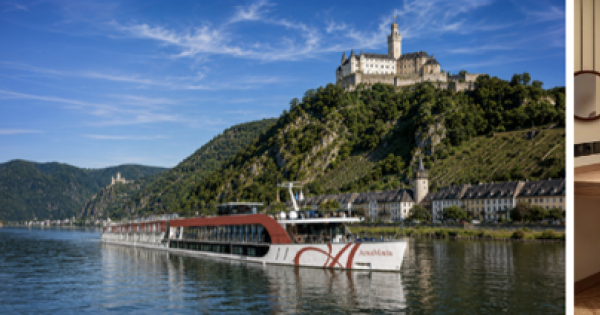
AmaWaterways Unveils New Ships and Expanded Experiences for 2028
AmaWaterways, the largest cruise line dedicated exclusively to river cruising, is looking ahead to 2028 with an exciting expansion of its award-winning river cruise portfolio, with the full 2028 programme now open for reservations. The new season will introduce four new ships across Europe and Africa, alongside new itineraries and expanded land experiences designed to give guests even more opportunities to explore the destinations they visit.

Nile Seray, an A&K Sanctuary, Sets Sail: Launching a New Chapter for Luxury River Cruising in Egypt
Nile Seray, an A&K Sanctuary, is now sailing, marking a new chapter in the company’s nearly five decades of river cruising in Egypt. Accommodating 64 guests across 32 suites, the riverboat combines contemporary design, exceptional dining and exclusive archaeological access, bringing a new dimension to A&K’s longstanding presence in one of the world’s most historically significant destinations. Sailing between Luxor and Aswan on four-night journeys, Nile Seray arrives at a time of growing demand and renewed international interest in Egypt following the opening of the Grand Egyptian Museum in November 2025. The riverboat offers a new way to experience the country’s extraordinary heritage, pairing visits to its most celebrated ancient sites with an intimate onboard setting designed around the landscapes and culture of the Nile.
YOUR NEWS, OUR NETWORK.
Do you have Great News you want to tell the world?
Be it updates about your business or your community, you can make sure that it’s heard by submitting your story to our network reaching hundreds of news sites across 6 verticals.